April 21, 2026
An Icon returns: Otto Dix's "Portrait of the Dancer Anita Berber" in Berlin
"Ruin and Rush. Berlin 1910 – 1930" sheds light on the contradictory atmosphere of Berlin at the time with around 35 works of classical modernism.
“Ruin and Rush. Berlin 1910–1930“
With "Portrait of the Dancer Anita Berber" by Otto Dix from the LBBW Collection
Neue Nationalgalerie | April 25, 2026 – January 3, 2027
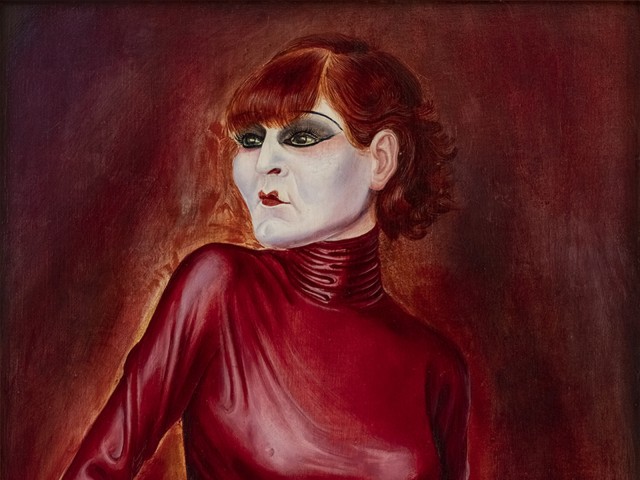
The painting "Portrait of the Dancer Anita Berber" by Otto Dix from 1925 is one of the most sought-after works in the LBBW Collection. Hardly any other painting is the subject of so many loan requests, and few works of art from the collection have such an impressive international exhibition history: Anita Berber was featured in the 2010 exhibition "Otto Dix" at the Neue Galerie in New York (a museum for German and Austrian art and design of the early twentieth century), in 2022 as part of the exhibition "Allemagne / Années 1920 / Nouvelle Objectivité / August Sander" at the Centre Pompidou in Paris and most recently in 2025 in the exhibition "Die Neue Sachlichkeit – Ein Jahrhundertjubiläum" at the Kunsthalle Mannheim. Its actual "home" is the Kunstmuseum Stuttgart, where the painting is on permanent loan and shown in rooms specially named after LBBW Otto Dix. As the Kunstmuseum Stuttgart is currently closed due to extensive renovation work, Anita Berber is now continuing her journey – and symbolically returning to the place where her career began: Berlin.
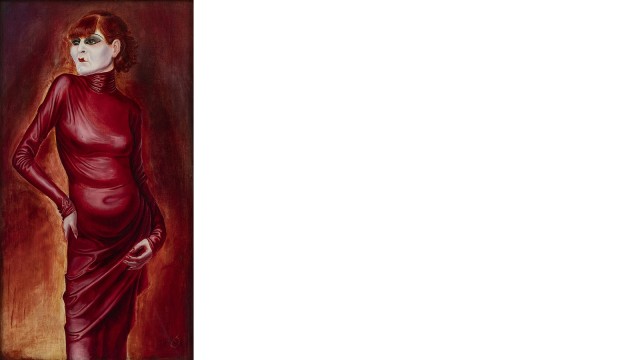
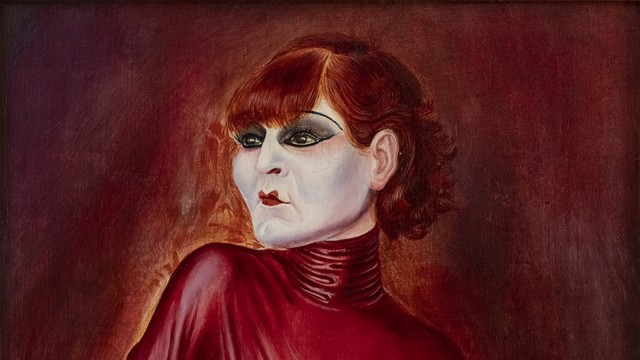
Otto Dix: Portrait of the Dancer Anita Berber, 1925 ©VG Bild-Kunst, Bonn 2021. Photo: Frank Kleinbach
Icon of the Weimar era
Dix's portrait of Anita Berber is now considered an iconic piece of art of the Weimar Republic. In the relentlessly precise imagery typical of New Objectivity, the painting combines portrait-like accuracy with a sharp commentary on the society of the so-called Golden Twenties. The excessive pose, the pointed gestures and the radical colors make the work a symbol of modern metropolitan culture – between intoxication, self-dramatization and inner vulnerability. Recent exhibitions have increasingly focused on Anita Berber herself: she was not only a scandalous star of the Berlin scene, but also a formative figure of modern expressive dance, an extraordinary actress and at the same time an artist who repeatedly had to struggle with financial difficulties and precarious living conditions. The painting makes these tensions palpable and makes Berber visible as a person of her time and at the same time as a timeless projection figure of modern femininity.
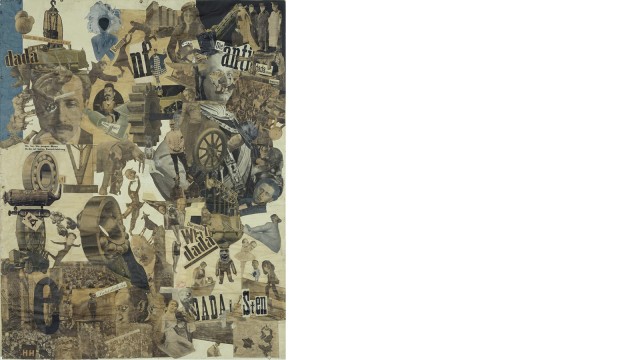
Hannah Höch, Cut with the Kitchen Knife Dada through the Last Weimar Beer-Belly Cultural Epoch in Germany, 1919
Neue Nationalgalerie. Photo: Jörg P. Anders, © VG Bild-Kunst Bonn, 2026
"Ruin and Rush. Berlin 1910 – 1930" at the Neue Nationalgalerie
Curated by Dr. Uta Caspary and Dr. Irina Hubert-Grun, the exhibition "Ruin and Rush. Berlin 1910 – 1930" (April 25, 2026 – January 3, 2027) at the Neue Nationalgalerie, illuminates the contradictory atmosphere of Berlin at the time with around 35 works of classical modernism – between splendour and misery, freedom and political extremism, intoxication and ruin. In three chapters, the dynamics of the big city with its architecture, traffic and nightlife, the social misery after the First World War as well as new role models for urban women and queer life are artistically addressed. A key work in the presentation is the loan from the LBBW Collection: "Portrait of the Dancer Anita Berber" by Otto Dix (1925). The painting is exemplary of the excessive city life of the Weimar period, combining style-defining New Objectivity, socio-critical acuity and the image of a radically modern, self-determined woman - and thus forms a central point of reference within the exhibition. The show mainly brings together paintings and sculptures from the collection of the Neue Nationalgalerie. With around 600,000 visitors a year, the Neue Nationalgalerie is one of the most visited art museums in Berlin. The LBBW Collection is therefore particularly pleased that the portrait of Anita Berber is being presented in the immediate vicinity of works by important female artists such as Tamara de Lempicka, Jeanne Mammen and Lotte Laserstein - and is thus accessible to a large, art-interested public in Berlin.
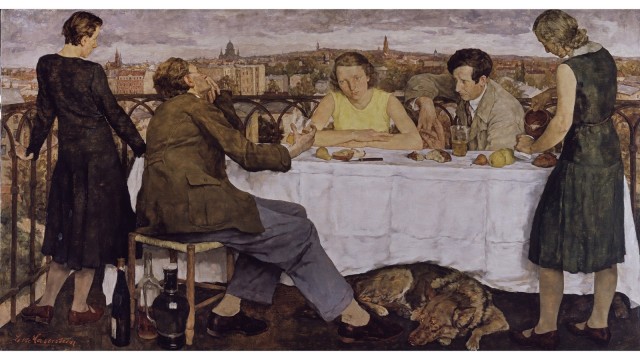
Lotte Laserstein, Evening over Potsdam, 1930
Neue Nationalgalerie. Photo: Roman März © VG Bild-Kunst Bonn, 2026
Neue Nationalgalerie | Ruin and Rush. Berlin 1910–1930 | 25.4.2026 – 3.1.2027
Find out more