
April 09, 2026
Experience works from the LBBW Collection in the exhibition "Das kalte Herz"
The Kunstmuseum Stuttgart presents an exhibition that puts Wilhelm Hauff's fairy tale "Das kalte Herz" (1827) for the first time in the context of contemporary art.
Das kalte Herz
With loans by Troika, Tracey Emin and Rosemarie Trockel from LBBW Collection
Kunstmuseum Stuttgart in the Kunstgebäude | 18.04.2026 – 04.10.2026
"But his heart did not rejoice; for it was a stony heart that lay in his breast. He was cold and without love for all people, and yet he could not get enough of gold and goods." (Das kalte Herz, Wilhelm Hauff, 1827)
The Kunstmuseum Stuttgart is showing an exhibition in the Kunstgebäude am Schlossplatz that presents Wilhelm Hauff's fairy tale "Das kalte Herz" (1827) for the first time in the context of contemporary art, focussing on the relationship between identity and social position in times of social change. Wilhelm Hauff describes the early effects of industrialisation and accelerated capitalism at the beginning of the 19th century as an individual story of greed, emotional coldness and social isolation. The fairy tale centres the character of the charcoal burner Peter Munk, who exchanges his living heart for an unfeeling heart of stone out of a longing for wealth – and threatens to lose his humanity in the process.
Hauff's fairy tale functions as an allegory of a world in upheaval: traditional moral concepts are being shaken, material demands are growing, and with them the fear of losing social belonging and recognition. Against this backdrop, the exhibition presents works by contemporary artists who thematically explore Hauff's fairy tale.
Several works of art from the LBBW Collection, which has a long-standing partnership with the Kunstmuseum Stuttgart, were lent to the exhibition.
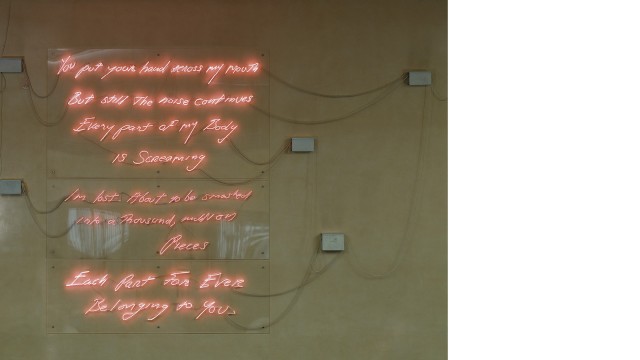
In Tracey Emin's neon sculpture "Love Poem for C.F.", the cool, industrial materiality of neon tubes meets a highly personal message: a love poem that the artist wrote to her former partner Carl Friedmann in the 1990s. Emin transforms neon tubes, originally intended for commercial neon signs, into a deeply emotional medium. By reproducing her own spidery handwriting, the luminous words take on an immediate, intimate presence. Typical of her oeuvre are strongly autobiographical themes such as intimacy, vulnerability, sexuality and memory, which Emin repeatedly renegotiates in various media – from installation and text to drawing and sculpture.
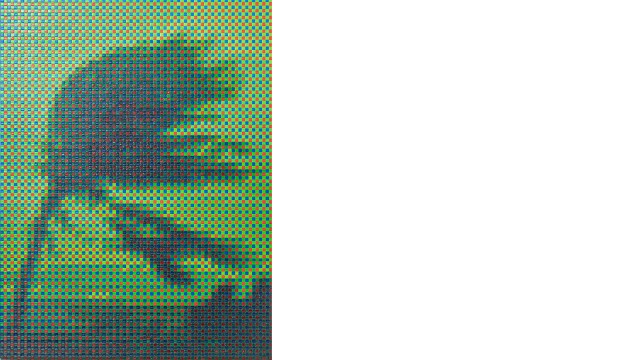
In their works, the German-French artist collective Troika examines progress and the impact of new technologies on the realities of our lives. The two works "Irma Watched over Machine" and "Woolsey Watched over Machine" from the LBBW Collection are based on surveillance camera images that capture the moment of two natural disasters – Hurricane Irma and the Woolsey wildfire. By translating these digital images into analogue paintings, Troika develops an idea of what the wind-whipped and burning palm trees might have looked like to the machine in their final moments. The titles of the works refer to Richard Brautigan's 1967 techno-utopian poem "All Watched over by Machines of Loving Grace", which outlines an enthusiastic vision of technological utopia in which machines improve and protect people's lives.

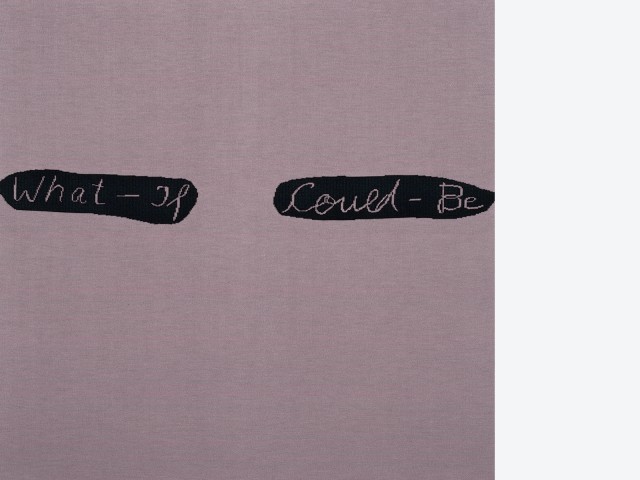
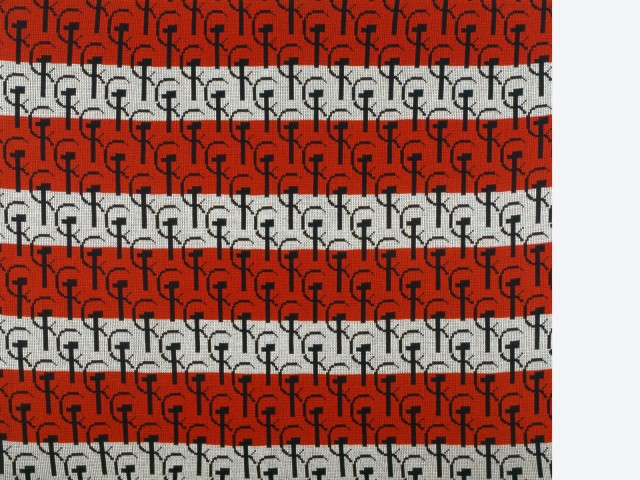
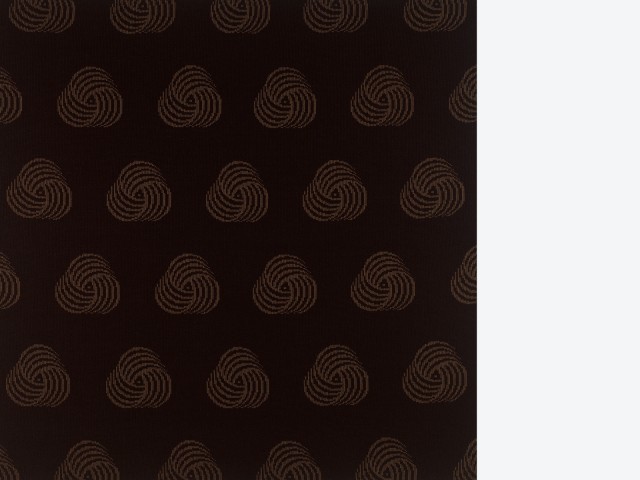
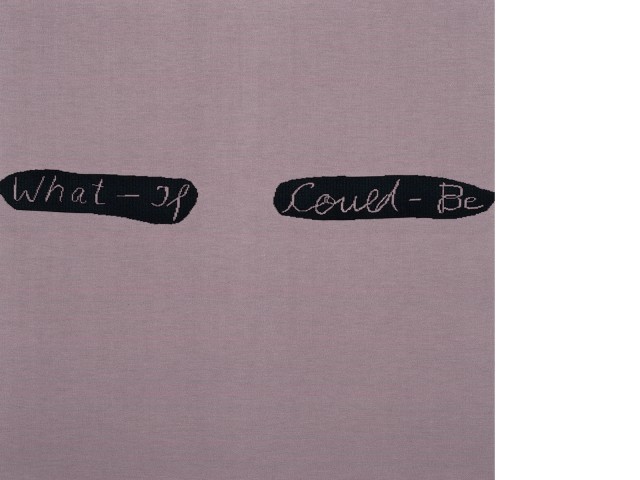
The artist Rosemarie Trockel has patterns and logos machine-knitted into her wool paintings in industrially produced woollen fabrics. Trockel uses knitting – a technique traditionally associated with housework and femininity – as an artistic medium to scrutinise themes such as gender roles, art production and consumer culture. At the same time, she criticises social expectations and the boundary between art and manual labour. The 9-part work "What it is like to be what you are not" from 1993 shows the webs of spiders that have been exposed to various drugs. The artist refers here to an Austrian scientist from the 19th century who investigated the activity of spiders and the effects of substances such as caffeine, mescaline or LSD on the shape of spider webs. At the interface between art and scientific experiments, Trockel's work allows us to reflect on the influence of humans on nature itself.
We hope you enjoy the exhibition Das kalte Herz at Kunstgebäude Stuttgart!
Find out more