
April 02, 2026
Popular policies against populists
A good idea: Austria cuts VAT on food in half.
To the point!

Germany is in urgent need of reform.
Political disenchantment in Germany keeps deepening. The sense that “those at the top” are out of touch and blind to ordinary people’s worries is fueling support for populist parties. These parties, in turn, promise the moon without explaining how they would pay for it. For the first time in three years, fear of social decline and poverty has once again – narrowly – risen to the top of Germans’ list of concerns (see fig. 1).
Fig. 1: Top-5 Worries of Germans
December 2025 | up to three responses
The current wave of politics-bashing in Germany has taken on grotesque proportions. Over the course of my life, I have met many politicians. In almost all cases, my impression was of people with integrity, driven by a sense of purpose. The stock caricature of the grasping, self-serving politician does not square with my experience.
When was the last genuinely popular policy in Germany?
Still, there is something to the idea of a growing disconnect between elected officials and voters in Germany. It hardly helps that, with numbing regularity, leading government officials claim Germans have turned lazy – or suggests reining in individual choices such as part-time work.
It is not as if Germany had no need of reform. Quite the opposite. But reforms only stand a chance of succeeding if policymakers secure at least some degree of public buy-in. When was the last time the German government implemented a measure that was broadly popular? One example is the Deutschlandticket, a nationwide flat-fare pass for local and regional public transport, introduced in 2023. By the end of last year, almost 15 million people were using it, even though the price has risen by 29% since its inception. So what could be done now to give voters a sense that “politics” is actually tackling something on their behalf?
A look across the border
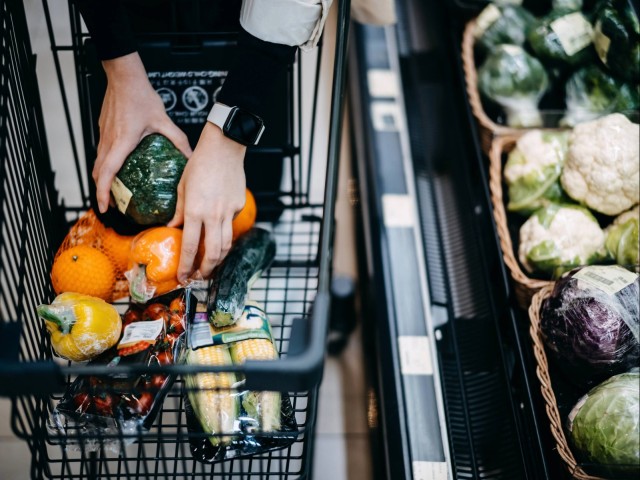
One promising idea comes from Austria. There, the government is cutting the value-added tax (VAT) on basic foodstuffs in half, to 5%, as of 1 July. The primary goal is to finally bring still-abovetarget inflation under control. At the same time, everyone who buys food stands to benefit – which is to say, everyone. The gains are particularly significant for low-income households, a group disproportionately drawn to the political fringes.
Fig. 2: Price level: foodstuff and overall inflation
2020=100
⬤ {series.name}: {point.y}
In Germany, food prices have risen by 36% since 2020, much more than overall inflation (see fig. 2). And it is well established that households with lower incomes devote a larger share of their disposable income to food (see fig. 3). Cutting VAT could provide relatively well-targeted relief to those most in need. Could such a measure command majority support? In 2023, none other than Markus Söder , the influential and ambitious prime minister of Bavaria, floated a proposal along these lines.
Abb. 3: Expenditure by income category
EUR per month, 2022
Fig. 3: Expenditure on food, beverages and tobacco as a share of net household income, by income category
The devil is in the details
Putting such a reform on the table is easy – the complications lie in the design. In Germany, the standard value-added tax rate is 19%. Most food products are already subject to a reduced rate of 7%. To make a difference that people actually feel, some selected items would have to be fully exempt. Which ones?
Ideally, these would be unprocessed products that support healthy diets and benefit the broader economy: grains, fruit, vegetables, pulses and similar staples. Given the largely negative environmental footprint of livestock farming, meat might reasonably be excluded. Whether that would get past Söder, who likes to present himself on social media under the hashtag #söderisst (“Söder eats”) as an unabashed meat lover, is another matter. A welcome side effect could be a shift toward healthier eating. Diets heavy in meat and ultra-processed or sugar-laden foods are among the main drivers of premature death worldwide .
How could such a tax cut be financed? A first step would be a sugar tax, similar to the levy that the U.K. has introduced with some success. Other “sin taxes” on harmful products such as tobacco and alcohol could play a role as well. Or another idea from Austria: higher taxes on n on-recyclable plastics.
A further question is whether such tax cuts would actually reach consumers. Or would this end up like the reduced VAT for the restaurants in Germany, which was introduced this year and largely fattened profit margins for restaurant owners? To avoid that outcome, policymakers could require large retailers to document how much of the tax cut they pass through to customers. The high degree of concentration in German food retailing makes oversight more feasible there than in the highly fragmented restaurant trade.
Dr. Moritz Kraemer, Chief Economist / Head of Research at LBBW
Download To the point!
-
286.7 KB | April 02, 2026
This publication is addressed exclusively at recipients in the EU, Switzerland, Liechtenstein and the United Kingdom.
This report is not being distributed by LBBW to any person in the United States and LBBW does not intend to solicit any person in the United States.
LBBW is under the supervision of the European Central Bank (ECB), Sonnemannstraße 22, 60314 Frankfurt/Main (Germany) and the German Federal Financial Supervisory Authority (BaFin), Graurhein-dorfer Str. 108, 53117 Bonn (Germany) / Marie-Curie-Str. 24-28, 60439 Frankfurt/Main (Germany).
This publication is based on generally available sources which we are not able to verify but which we believe to be reliable. Nevertheless, we assume no liability for the accuracy and completeness of this publication. It conveys our non-binding opinion of the market and the products at the time of the editorial deadline, irrespective of any own holdings in these products. This publication does not replace individual advice. It serves only for informational purposes and should not be seen as an offer or request for a purchase or sale. For additional, more timely in-formation on concrete investment options and for indi-vidual investment advice, please contact your investment advisor.
We retain the right to change the opinions expressed herein at any time and without prior notice. More-over, we retain the right not to update this information or to stop such updates entirely without prior notice.
Past performance, simulations and forecasts shown or described in this publication do not constitute a reliable indicator of future performance.
The acceptance of provided research services by a securities services company can qualify as a benefit in supervisory law terms. In these cases LBBW assumes that the benefit is intended to improve the quality of the relevant service for the customer of the benefit recipient.
Additional Disclaimer for recipients in the United Kingdom:
Authorised and regulated by the European Central Bank (ECB), Sonnemannstraße 22, 60314 Frank-furt/Main (Germany) and the German Federal Financial Supervisory Authority (BaFin), Graurheindorfer Str. 108, 53117 Bonn (Germany) / Marie-Curie-Str. 24-28, 60439 Frankfurt/Main (Germany). Authorised by the Prudential Regulation Authority. Subject to regulation by the Financial Conduct Authority and limited regulation by the Prudential Regulation Authority. Details about the extent of our regulation by the Prudential Regulation Authority are available from us on request.
This publication is distributed by LBBW to professional clients and eligible counterparties only and not retail clients. For these purposes, a retail client means a person who is one (or more) of (i) a client as defined in point (7) of Article 2(1) of the UK version of Regulation (EU) 600/2014 which is part of UK law (UK MiFIR) by virtue of the European Union (Withdrawal) Act 2018 (EUWA) who is not a professional client (as defined in point (8) of Article 2(1) of UK MiFIR); or (ii) a customer within the meaning of the provisions of the Financial Services and Markets Act 2000 (as amended, the FSMA) and any rules or regulations made under the FSMA (which were relied on immediately before the 31 December 2020 (IP completion day)) to implement Directive (EU) 2016/97 on insurance distribution, where that customer would not qualify as a professional client, as defined in point (8) of Article 2(1) of UK MiFIR; or (iii) not a qualified investor as defined in the UK version of Regulation (EU) 2017/1129 on the prospectus to be published when securities are offered to the public or admitted to trading on a regulated market, which is part of UK law by virtue of the EUWA (the UK Prospectus Regulation).
This publication has been prepared by LBBW for information purposes only. It reflects LBBW’s views and it does not offer an objective or independent outlook on the matters discussed. The publication and the views expressed herein do not constitute a personal recommendation or investment advice and should not be relied on to make an investment decision. The appropriateness of a particular investment or strategy will depend on an investor’s individual. You should make your own independent evaluation of the relevance and adequacy of the information contained in this publication and make such other investigations as you deem necessary, including obtaining independent financial advice, before partici-pating in any transaction in respect of the financial instruments referred to this publication herein.
Under no circumstance is the information contained within such publication to be used or considered as an offer to sell or a solicitation of an offer to buy any particular investment or security. Neither LBBW nor any of its subsidiary undertakings or affiliates, directors, officers, employees, advisers or agents accepts any responsibility or liability whatsoever for/or makes any representation or warranty, express or implied, as to the truth, fullness, accuracy or completeness of the information in this publication (or whether any information has been omitted from the publication) or any other information relating to the, whether written, oral or in a visual or electronic form, and howsoever transmitted or made available or for any loss howsoever arising from any use of this publication or its contents or otherwise arising in connection therewith.
The information, statements and opinions contained in this publication do not constitute or form part of a public offer. LBBW assumes no responsibility for any fact, recommendation, opinion or advice con-tained in any such publication and expressly disclaims any responsibility for any decisions or for the suitability of any security or transaction based on it. Any decisions that a professional client or eligible counterparty may make to buy, sell or hold a security based on such publication will be entirely their own and not in any way deemed to be endorsed or influenced by or attributed to LBBW.
LBBW does not provide investment, tax or legal advice. Prior to entering into any proposed transaction on the basis of the information contained in this publication, recipients should determine, in consultation with their own investment, legal, tax, regulatory and accounting advisors, the economic risks and merits, as well as the legal, tax, regulatory and accounting characteristics and consequences, of the transac-tion.