August 27, 2026
Dubai: A desert miracle under strain
The Iran war puts Dubai’s success story to its sternest test yet.
To the point!

"Dubai as a haven of stability: that era is over."
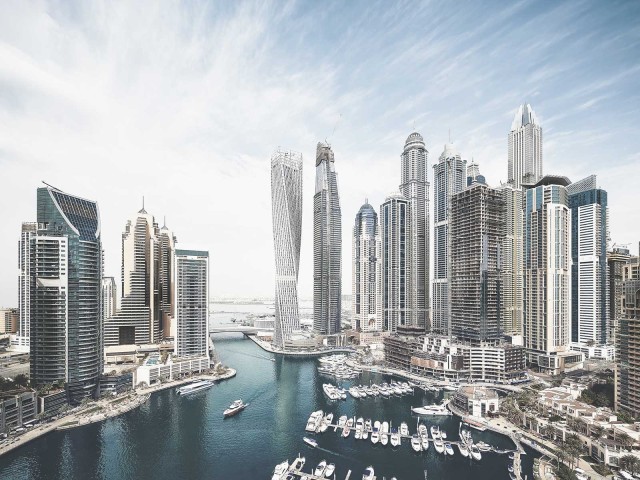
Last week I wrote here about China , probably THE growth story of recent decades. This week’s subject is another success story, which is also coming under pressure, though for very different reasons: Dubai. Of the places around the Persian Gulf, from Qatar to Bahrain, from Abu Dhabi to Kuwait, none has transformed itself as dramatically as the emirate of Dubai. That transformation was partly born of necessity. Dubai is one of the United Arab Emirates, but most of the federation’s oil lies elsewhere, above all in Abu Dhabi. Its leaders therefore had to build an economic vision of their own. They did so with remarkable flair, despite the occasional stumble along the way. More on that in a moment.
The Iran war calls Dubai’s appeal into question Over recent decades, this desert emirate has turned itself into a magnet for tourists, migrant workers, logistics firms and global capital. Stroll through Dubai’s old quarter, on the far side of Dubai Creek, and it is still possible to imagine how sleepy the place must have been in the early 1960s. Since then, the emirate has become one of the world’s most important hubs. In 2025, with almost 100 million passengers , Dubai International Airport (DXB) handled more travelers than any other airport on earth except Atlanta’s Hartsfield-Jackson airport in the U.S. Today, the Dubai model itself is under greater strain than ever. For decades, the emirate traded on stability and predictability in a volatile region. The absence of income tax surely helped as well, luring millionaires and billionaires from all over the world. Since the start of the Iran war, those advantages have begun to look far less secure, at least for now. Shortly after the U.S.-Israeli attacks began, Iran struck Dubai with drones and missiles. By early May, the UAE had come under attack 2,800 times, more than any other Gulf state and even more than Israel. Symbolic sites such as the luxury hotels Burj al Arab and Fairmont The Palm, as well as the airport, were targeted, too. Few Gulf states are as close to Iran, and therefore as exposed, as the UAE, which is also a strategic partner of the U.S. The physical damage may be limited. Yet the psychological scars are likely to last much longer than the war itself.
Of Dubai’s 3.5 million residents, more than 90% are foreigners. Migrants from South Asia and Egypt in particular take many of the low-skilled jobs and now face fewer, worse-paid opportunities. Unemployment is rising and wages are being cut across the board. Many highly skilled expats, too, have switched to working remotely from safer countries. People I know who work in Dubaihave returned to Europe with their families, at least temporarily. The U.S. State Department was not alone in urging its citizens to leave. Anecdotal evidence suggests that wealthy Asians in particular are heading for the exits – mainly toward Hong Kong and Singapore.
Fig. 1.1: Dubai Real Estate Turnover
billions of dirhams
Fig. 1.2: Dubai Real Estate Turnover
⬤ {series.name}: {point.y}
It is too early for a requiem
Make no mistake: the Iran war is the biggest shock Dubai has ever faced. Tourism, logistics and financial services have all been badly hit. Current data that might offer a clearer picture of the crisis remain patchy. But judging by the once-booming property market, which has now stalled, the likely economic fallout looks severe (see fig. 1).
Still, “Dubai is finished” may be selling newspapers and catering to schadenfreude among the less wealthy. But I believe it goes too far. The emirate has risen from the ashes before. Most notably after the financial crisis, when it was drowning in debt and stood on the brink of bankruptcy. Its wealthy neighbor Abu Dhabi rescued it with a $10 billion cash injection. That, incidentally, is why the world’s tallest skyscraper is not called Burj Dubai, as originally planned, but Burj Khalifa, after Abu Dhabi’s emir at the time. Memories fade faster than people tend to assume in the heat of the moment – especially when a tax-free life beckons. Despite all the anecdotes now making the rounds, there is, as yet, no full-on exodus of foreign professionals from Dubai. I firmly expect Dubai to bounce back from the fallout of the war. Whether the rampant growth rates of the past can be repeated is another matter. Especially the logistics around the huge Jebel Ali port will depend on the ease with which ships can enter and exit the Strait of Hormuz.
In the long run, climate change may prove the bigger threat to Dubai’s appeal as a place to live and do business. Even today, summer temperatures regularly exceed 40°C, with humidity of up to 90%. Not everyone will relish that. Between 1975 and 2013, the average temperature rose by 2.8°C . It is still rising. I vividly remember retreating to the indoor ski slope during my last stay in Dubai to cool down from the sweltering heat.
Dr. Moritz Kraemer, Chief Economist / Head of Research at LBBW
Download To the point!
-
1.2 MB | August 27, 2026
This publication is addressed exclusively at recipients in the EU, Switzerland, Liechtenstein and the United Kingdom.
This report is not being distributed by LBBW to any person in the United States and LBBW does not intend to solicit any person in the United States.
LBBW is under the supervision of the European Central Bank (ECB), Sonnemannstraße 22, 60314 Frankfurt/Main (Germany) and the German Federal Financial Supervisory Authority (BaFin), Graurhein-dorfer Str. 108, 53117 Bonn (Germany) / Marie-Curie-Str. 24-28, 60439 Frankfurt/Main (Germany).
This publication is based on generally available sources which we are not able to verify but which we believe to be reliable. Nevertheless, we assume no liability for the accuracy and completeness of this publication. It conveys our non-binding opinion of the market and the products at the time of the editorial deadline, irrespective of any own holdings in these products. This publication does not replace individual advice. It serves only for informational purposes and should not be seen as an offer or request for a purchase or sale. For additional, more timely in-formation on concrete investment options and for indi-vidual investment advice, please contact your investment advisor.
We retain the right to change the opinions expressed herein at any time and without prior notice. More-over, we retain the right not to update this information or to stop such updates entirely without prior notice.
Past performance, simulations and forecasts shown or described in this publication do not constitute a reliable indicator of future performance.
The acceptance of provided research services by a securities services company can qualify as a benefit in supervisory law terms. In these cases LBBW assumes that the benefit is intended to improve the quality of the relevant service for the customer of the benefit recipient.
Additional Disclaimer for recipients in the United Kingdom:
Authorised and regulated by the European Central Bank (ECB), Sonnemannstraße 22, 60314 Frank-furt/Main (Germany) and the German Federal Financial Supervisory Authority (BaFin), Graurheindorfer Str. 108, 53117 Bonn (Germany) / Marie-Curie-Str. 24-28, 60439 Frankfurt/Main (Germany). Authorised by the Prudential Regulation Authority. Subject to regulation by the Financial Conduct Authority and limited regulation by the Prudential Regulation Authority. Details about the extent of our regulation by the Prudential Regulation Authority are available from us on request.
This publication is distributed by LBBW to professional clients and eligible counterparties only and not retail clients. For these purposes, a retail client means a person who is one (or more) of (i) a client as defined in point (7) of Article 2(1) of the UK version of Regulation (EU) 600/2014 which is part of UK law (UK MiFIR) by virtue of the European Union (Withdrawal) Act 2018 (EUWA) who is not a professional client (as defined in point (8) of Article 2(1) of UK MiFIR); or (ii) a customer within the meaning of the provisions of the Financial Services and Markets Act 2000 (as amended, the FSMA) and any rules or regulations made under the FSMA (which were relied on immediately before the 31 December 2020 (IP completion day)) to implement Directive (EU) 2016/97 on insurance distribution, where that customer would not qualify as a professional client, as defined in point (8) of Article 2(1) of UK MiFIR; or (iii) not a qualified investor as defined in the UK version of Regulation (EU) 2017/1129 on the prospectus to be published when securities are offered to the public or admitted to trading on a regulated market, which is part of UK law by virtue of the EUWA (the UK Prospectus Regulation).
This publication has been prepared by LBBW for information purposes only. It reflects LBBW’s views and it does not offer an objective or independent outlook on the matters discussed. The publication and the views expressed herein do not constitute a personal recommendation or investment advice and should not be relied on to make an investment decision. The appropriateness of a particular investment or strategy will depend on an investor’s individual. You should make your own independent evaluation of the relevance and adequacy of the information contained in this publication and make such other investigations as you deem necessary, including obtaining independent financial advice, before partici-pating in any transaction in respect of the financial instruments referred to this publication herein.
Under no circumstance is the information contained within such publication to be used or considered as an offer to sell or a solicitation of an offer to buy any particular investment or security. Neither LBBW nor any of its subsidiary undertakings or affiliates, directors, officers, employees, advisers or agents accepts any responsibility or liability whatsoever for/or makes any representation or warranty, express or implied, as to the truth, fullness, accuracy or completeness of the information in this publication (or whether any information has been omitted from the publication) or any other information relating to the, whether written, oral or in a visual or electronic form, and howsoever transmitted or made available or for any loss howsoever arising from any use of this publication or its contents or otherwise arising in connection therewith.
The information, statements and opinions contained in this publication do not constitute or form part of a public offer. LBBW assumes no responsibility for any fact, recommendation, opinion or advice con-tained in any such publication and expressly disclaims any responsibility for any decisions or for the suitability of any security or transaction based on it. Any decisions that a professional client or eligible counterparty may make to buy, sell or hold a security based on such publication will be entirely their own and not in any way deemed to be endorsed or influenced by or attributed to LBBW.
LBBW does not provide investment, tax or legal advice. Prior to entering into any proposed transaction on the basis of the information contained in this publication, recipients should determine, in consultation with their own investment, legal, tax, regulatory and accounting advisors, the economic risks and merits, as well as the legal, tax, regulatory and accounting characteristics and consequences, of the transac-tion.