October 23, 2026
Another U.S. budget showdown could loom
The debt ceiling may soon become a dangerous political weapon again.
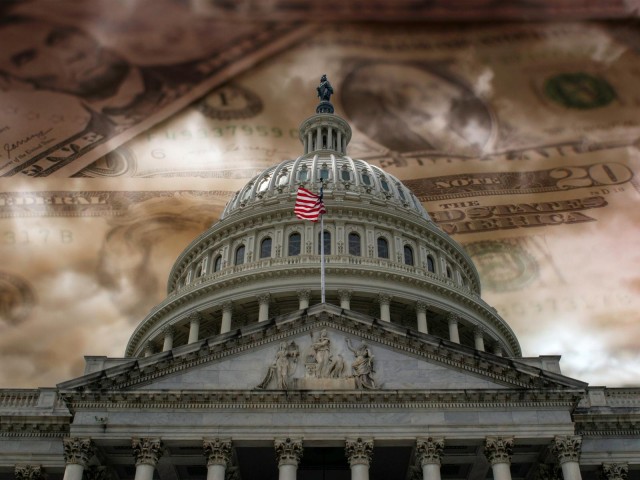
To the point!

"Should a confrontation arise, it is likely to be dramatic."
Why does the row over how much the U.S. can borrow so often end in a government shutdown? Have you ever wondered about that, too? You would be right to do so: the arrangement is an odd one. As far as I know, in every country – parliamentary approval of a budget that entails, say, €50 billion in net new borrowing also gives the government authority to borrow the money. Not in the U.S. (Denmark is the other sole exception worldwide).
There are two separate congressional procedures: one for approving the budget, and another for authorizing the borrowing needed to finance it. Until 1917, Congress even had to sign off on every government loan individually. Quite why this dual legislative track exists is difficult to say; its logic certainly escapes me. For decades, however, increases in the debt ceiling passed without incident. Since the Second World War, Congress has raised it more than 100 times – without a murmur.
2011 comes to mind
As Washington has become more polarized, though, the debt ceiling has increasingly been wielded as a political weapon – whenever one party controls the House of Representatives while the other party holds the White House. That can be dangerous. If Congress were stubbornly to refuse to raise the ceiling, this could, in the worst case, result in a technical default – a failure by the federal government to meet its financial obligations it had already incurred.
The summer of 2011 was a particularly close call. Barack Obama was the occupant in the White House, while Republicans had won control of the House of Representatives in the midterm elections. You may remember the so-called Tea Party, the movement Newt Gingrich launched in the 1990s. It was the first movement within the Republican Party to make confrontation and disruption its political trademark. The debt ceiling gave it an effective way to back the detested Democratic president into a corner. Obama offered tax increases to reduce the deficits. The Tea Party would have none of it. It wanted to force the president to cut spending programs close to Democrats‘ hearts. The U.S., meanwhile, drifted alarmingly close to default. With only days to spare until Day X, the government was on the verge of being unable to meet its debt payments. Eventually Obama blinked, and the House lifted the debt ceiling. Republicans had prevailed. Congress held the upper hand and forced its will on the administration.
I remember the episode well. At the time, I worked for the ratings agency Standard & Poor’s (now S&P Global) and served on the committee that downgraded the U.S. credit rating for the first time in history, to AA+ from AAA. The risk of an accident born of political polarization was simply too great. Flirting with default to subdue political opponents is not a way to run a country, much less so a top-rated one.
Is another debt-ceiling crisis likely?
The statutory U.S. debt ceiling – the maximum amount the federal government is permitted to borrow – currently stands at $41.1 trillion. At the present rate of borrowing, that threshold is likely to be reached before long. U.S. debt passed $40 trillion in early September. If Democrats take control of the House in the midterm elections in early November, another confrontation is all but inevitable – unless the Republican majority raises the ceiling again in the lame-duck period before the new Congress is sworn in in January.
Should a confrontation arise, it is likely to be even more dramatic than in 2011. Hostilities between the parties are more intense than ever before. The current U.S. president, moreover, has so far shown little willingness to compromise. Nor is it easy to see a Democratic majority extending an olive branch to a president who has branded its members “extremists,” “jihadists” and “terrorists.”
We must all hope that, despite it all, enough politicians in D.C. still put the national interest above partisan interests. A U.S. default would be a catastrophe for capital markets. In every financial crisis, U.S. Treasury securities have served as a safe haven. We can only speculate about what would happen if politics were to turn that supposedly safe haven into a minefield – and dread the prospect.
If the U.S. were to default, Europe would not escape unscathed. The financial crisis that began in the U.S. in 2008 as the subprime crisis also morphed into the eurozone sovereign-debt crisis. There is every reason to keep our fingers crossed. Or pray!
Dr. Moritz Kraemer, Chief Economist / Head of Research at LBBW
Download To the point!
-
1.2 MB | October 23, 2026
This publication is addressed exclusively at recipients in the EU, Switzerland, Liechtenstein and the United Kingdom.
This report is not being distributed by LBBW to any person in the United States and LBBW does not intend to solicit any person in the United States.
LBBW is under the supervision of the European Central Bank (ECB), Sonnemannstraße 22, 60314 Frankfurt/Main (Germany) and the German Federal Financial Supervisory Authority (BaFin), Graurhein-dorfer Str. 108, 53117 Bonn (Germany) / Marie-Curie-Str. 24-28, 60439 Frankfurt/Main (Germany).
This publication is based on generally available sources which we are not able to verify but which we believe to be reliable. Nevertheless, we assume no liability for the accuracy and completeness of this publication. It conveys our non-binding opinion of the market and the products at the time of the editorial deadline, irrespective of any own holdings in these products. This publication does not replace individual advice. It serves only for informational purposes and should not be seen as an offer or request for a purchase or sale. For additional, more timely in-formation on concrete investment options and for indi-vidual investment advice, please contact your investment advisor.
We retain the right to change the opinions expressed herein at any time and without prior notice. More-over, we retain the right not to update this information or to stop such updates entirely without prior notice.
Past performance, simulations and forecasts shown or described in this publication do not constitute a reliable indicator of future performance.
The acceptance of provided research services by a securities services company can qualify as a benefit in supervisory law terms. In these cases LBBW assumes that the benefit is intended to improve the quality of the relevant service for the customer of the benefit recipient.
Additional Disclaimer for recipients in the United Kingdom:
Authorised and regulated by the European Central Bank (ECB), Sonnemannstraße 22, 60314 Frank-furt/Main (Germany) and the German Federal Financial Supervisory Authority (BaFin), Graurheindorfer Str. 108, 53117 Bonn (Germany) / Marie-Curie-Str. 24-28, 60439 Frankfurt/Main (Germany). Authorised by the Prudential Regulation Authority. Subject to regulation by the Financial Conduct Authority and limited regulation by the Prudential Regulation Authority. Details about the extent of our regulation by the Prudential Regulation Authority are available from us on request.
This publication is distributed by LBBW to professional clients and eligible counterparties only and not retail clients. For these purposes, a retail client means a person who is one (or more) of (i) a client as defined in point (7) of Article 2(1) of the UK version of Regulation (EU) 600/2014 which is part of UK law (UK MiFIR) by virtue of the European Union (Withdrawal) Act 2018 (EUWA) who is not a professional client (as defined in point (8) of Article 2(1) of UK MiFIR); or (ii) a customer within the meaning of the provisions of the Financial Services and Markets Act 2000 (as amended, the FSMA) and any rules or regulations made under the FSMA (which were relied on immediately before the 31 December 2020 (IP completion day)) to implement Directive (EU) 2016/97 on insurance distribution, where that customer would not qualify as a professional client, as defined in point (8) of Article 2(1) of UK MiFIR; or (iii) not a qualified investor as defined in the UK version of Regulation (EU) 2017/1129 on the prospectus to be published when securities are offered to the public or admitted to trading on a regulated market, which is part of UK law by virtue of the EUWA (the UK Prospectus Regulation).
This publication has been prepared by LBBW for information purposes only. It reflects LBBW’s views and it does not offer an objective or independent outlook on the matters discussed. The publication and the views expressed herein do not constitute a personal recommendation or investment advice and should not be relied on to make an investment decision. The appropriateness of a particular investment or strategy will depend on an investor’s individual. You should make your own independent evaluation of the relevance and adequacy of the information contained in this publication and make such other investigations as you deem necessary, including obtaining independent financial advice, before partici-pating in any transaction in respect of the financial instruments referred to this publication herein.
Under no circumstance is the information contained within such publication to be used or considered as an offer to sell or a solicitation of an offer to buy any particular investment or security. Neither LBBW nor any of its subsidiary undertakings or affiliates, directors, officers, employees, advisers or agents accepts any responsibility or liability whatsoever for/or makes any representation or warranty, express or implied, as to the truth, fullness, accuracy or completeness of the information in this publication (or whether any information has been omitted from the publication) or any other information relating to the, whether written, oral or in a visual or electronic form, and howsoever transmitted or made available or for any loss howsoever arising from any use of this publication or its contents or otherwise arising in connection therewith.
The information, statements and opinions contained in this publication do not constitute or form part of a public offer. LBBW assumes no responsibility for any fact, recommendation, opinion or advice con-tained in any such publication and expressly disclaims any responsibility for any decisions or for the suitability of any security or transaction based on it. Any decisions that a professional client or eligible counterparty may make to buy, sell or hold a security based on such publication will be entirely their own and not in any way deemed to be endorsed or influenced by or attributed to LBBW.
LBBW does not provide investment, tax or legal advice. Prior to entering into any proposed transaction on the basis of the information contained in this publication, recipients should determine, in consultation with their own investment, legal, tax, regulatory and accounting advisors, the economic risks and merits, as well as the legal, tax, regulatory and accounting characteristics and consequences, of the transac-tion.