
March 27, 2026
War in Iran will lead to food price inflation
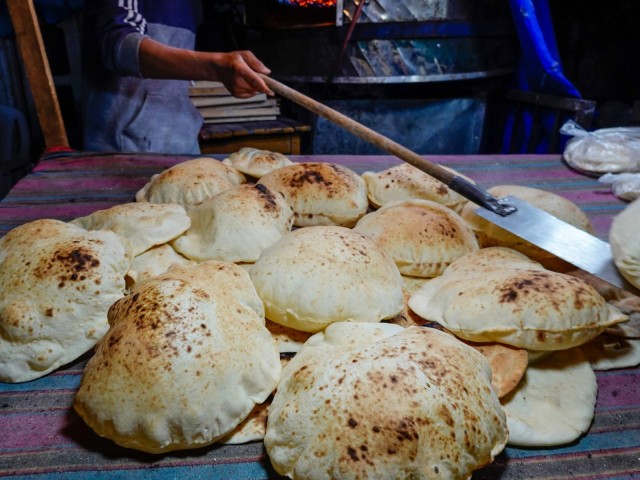
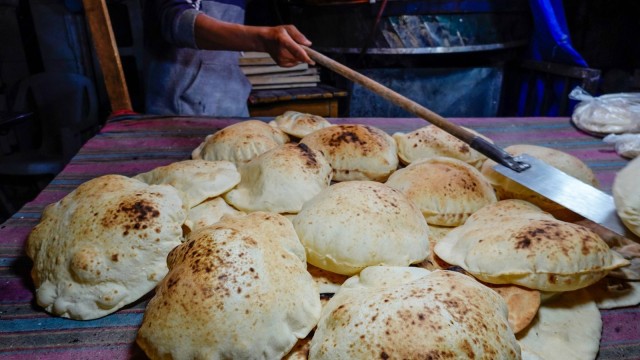
A reflective postcard from Luxor.
To the point!

The prospect of higher food prices driven by the energy shock is bad news for all of us.
Since the joint offensive by the U.S. and Israel against Iran began, the Strait of Hormuz has been almost completely blocked. Tehran has choked off a vital trade artery on which all the states bordering the Persian Gulf – and millions of oil and gas users worldwide – rely. Only a trickle of ships is still making it through this chokepoint (see fig. 1).
Fig. 1: Daily crossings of ships through the Strait of Hormuz
February 1 through March 22
In Germany, public debate has so far focused mainly on higher petrol and diesel prices. Policymakers have rushed to roll out measures to curb the surge at the pump – with limited success. Yet fuel may soon turn out to be little more than a sideshow, albeit a very visible one thanks to the towering price boards that flank petrol stations. Fuel accounts for only about 3% of total spending in the average German household – hardly a dominant item.
The inflation risk in food prices
Spending on food in Germany is more than three times as high. And one thing is often overlooked: food and energy prices tend to move together. That is no accident. There is a lot of energy embedded in food – from tractors in the field to transport, refrigeration, processing and packaging, every step of the value chain requires energy as a critical input. As a result, energy and food prices largely move in tandem (see fig. 2).
Fig. 2: Oil and food prices move in tandem
⬤ {series.name}: {point.y}
In anticipation of higher energy costs eventually feeding through into food prices, wheat prices have already risen sharply in recent weeks. We may just be at the start of a process in which higher energy costs gradually feed through.
A bottleneck for fertilizer
The Strait of Hormuz is not only critical for oil and gas shipments. Less well known is the fact that a third of all seaborne fertilizer worldwide is transported through this narrow waterway. Fertilizer prices, too, are tightly linked to energy prices. Natural gas is a key input in producing nitrogen-based fertilizers.
Since the war began, the price of urea, a nitrogen fertilizer, has jumped by almost one third – just as the planting season on the northern hemisphere gets under way.
Developing countries are hit hardest
The prospect of higher food prices driven by the energy shock is bad news for all of us. But it hits poorer countries far harder, especially those that, given their limited natural resources, are heavily reliant on food imports – notably in North Africa.
Consider Egypt, for example, from where I am writing to you today from the Valley of the Kings. On average, almost 1.5% of gross domestic product is spent on food imports. In some neighboring countries, the share is even higher (see fig. 3).
Fig. 3: Food imports
% of GDP, 2023
Egypt’s public debt stands at more than 80% of GDP, and household saving – constrained by low incomes – is scant. The country is therefore heavily dependent on foreign investors. After the war broke out, many of them simply pulled out . The result: since the war started, the Egyptian pound (EGP) has lost more than 10% of its value, pushing up the cost of all imports. With a trade deficit of just under 14% of GDP, that is a serious drag.
In trade in services, Egypt traditionally runs a surplus with the rest of the world, but even there the Iran war brings new risks. Tourism, which in 2024 generated 8.5% of total value added, is unlikely to benefit from fighting in the wider region. Not everyone is as adventurous as me and my family.
On top of that, a return to normal shipping through the Suez Canal – a key source of government revenue – could be further delayed after the attacks by Yemen’s Houthi rebels in 2024. Before 2024, the canal brought in about 70bn EGP (roughly 1.2bn EUR) a month; today, monthly revenues fluctuate between 40bn and 50bn EGP. All this is playing out in a country where percapita income, measured in purchasing-power terms, is less than 30% of the German level. It is an awful lot to bear at once. A repeat of the 1977 “bread riots” does not seem imminent, but people are being asked to endure a great deal.
A different perspective at the pump
So perhaps, the next time you fill up your car, it is some consolation to remember that elsewhere people are suffering the consequences of this war in ways that are far more existential than anything we are facing.
Dr. Moritz Kraemer, Chief Economist / Head of Research at LBBW
Download To the point!
-
1.3 MB | March 27, 2026
This publication is addressed exclusively at recipients in the EU, Switzerland, Liechtenstein and the United Kingdom.
This report is not being distributed by LBBW to any person in the United States and LBBW does not intend to solicit any person in the United States.
LBBW is under the supervision of the European Central Bank (ECB), Sonnemannstraße 22, 60314 Frankfurt/Main (Germany) and the German Federal Financial Supervisory Authority (BaFin), Graurhein-dorfer Str. 108, 53117 Bonn (Germany) / Marie-Curie-Str. 24-28, 60439 Frankfurt/Main (Germany).
This publication is based on generally available sources which we are not able to verify but which we believe to be reliable. Nevertheless, we assume no liability for the accuracy and completeness of this publication. It conveys our non-binding opinion of the market and the products at the time of the editorial deadline, irrespective of any own holdings in these products. This publication does not replace individual advice. It serves only for informational purposes and should not be seen as an offer or request for a purchase or sale. For additional, more timely in-formation on concrete investment options and for indi-vidual investment advice, please contact your investment advisor.
We retain the right to change the opinions expressed herein at any time and without prior notice. More-over, we retain the right not to update this information or to stop such updates entirely without prior notice.
Past performance, simulations and forecasts shown or described in this publication do not constitute a reliable indicator of future performance.
The acceptance of provided research services by a securities services company can qualify as a benefit in supervisory law terms. In these cases LBBW assumes that the benefit is intended to improve the quality of the relevant service for the customer of the benefit recipient.
Additional Disclaimer for recipients in the United Kingdom:
Authorised and regulated by the European Central Bank (ECB), Sonnemannstraße 22, 60314 Frank-furt/Main (Germany) and the German Federal Financial Supervisory Authority (BaFin), Graurheindorfer Str. 108, 53117 Bonn (Germany) / Marie-Curie-Str. 24-28, 60439 Frankfurt/Main (Germany). Authorised by the Prudential Regulation Authority. Subject to regulation by the Financial Conduct Authority and limited regulation by the Prudential Regulation Authority. Details about the extent of our regulation by the Prudential Regulation Authority are available from us on request.
This publication is distributed by LBBW to professional clients and eligible counterparties only and not retail clients. For these purposes, a retail client means a person who is one (or more) of (i) a client as defined in point (7) of Article 2(1) of the UK version of Regulation (EU) 600/2014 which is part of UK law (UK MiFIR) by virtue of the European Union (Withdrawal) Act 2018 (EUWA) who is not a professional client (as defined in point (8) of Article 2(1) of UK MiFIR); or (ii) a customer within the meaning of the provisions of the Financial Services and Markets Act 2000 (as amended, the FSMA) and any rules or regulations made under the FSMA (which were relied on immediately before the 31 December 2020 (IP completion day)) to implement Directive (EU) 2016/97 on insurance distribution, where that customer would not qualify as a professional client, as defined in point (8) of Article 2(1) of UK MiFIR; or (iii) not a qualified investor as defined in the UK version of Regulation (EU) 2017/1129 on the prospectus to be published when securities are offered to the public or admitted to trading on a regulated market, which is part of UK law by virtue of the EUWA (the UK Prospectus Regulation).
This publication has been prepared by LBBW for information purposes only. It reflects LBBW’s views and it does not offer an objective or independent outlook on the matters discussed. The publication and the views expressed herein do not constitute a personal recommendation or investment advice and should not be relied on to make an investment decision. The appropriateness of a particular investment or strategy will depend on an investor’s individual. You should make your own independent evaluation of the relevance and adequacy of the information contained in this publication and make such other investigations as you deem necessary, including obtaining independent financial advice, before partici-pating in any transaction in respect of the financial instruments referred to this publication herein.
Under no circumstance is the information contained within such publication to be used or considered as an offer to sell or a solicitation of an offer to buy any particular investment or security. Neither LBBW nor any of its subsidiary undertakings or affiliates, directors, officers, employees, advisers or agents accepts any responsibility or liability whatsoever for/or makes any representation or warranty, express or implied, as to the truth, fullness, accuracy or completeness of the information in this publication (or whether any information has been omitted from the publication) or any other information relating to the, whether written, oral or in a visual or electronic form, and howsoever transmitted or made available or for any loss howsoever arising from any use of this publication or its contents or otherwise arising in connection therewith.
The information, statements and opinions contained in this publication do not constitute or form part of a public offer. LBBW assumes no responsibility for any fact, recommendation, opinion or advice con-tained in any such publication and expressly disclaims any responsibility for any decisions or for the suitability of any security or transaction based on it. Any decisions that a professional client or eligible counterparty may make to buy, sell or hold a security based on such publication will be entirely their own and not in any way deemed to be endorsed or influenced by or attributed to LBBW.
LBBW does not provide investment, tax or legal advice. Prior to entering into any proposed transaction on the basis of the information contained in this publication, recipients should determine, in consultation with their own investment, legal, tax, regulatory and accounting advisors, the economic risks and merits, as well as the legal, tax, regulatory and accounting characteristics and consequences, of the transac-tion.